-
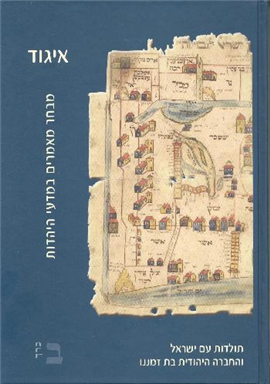
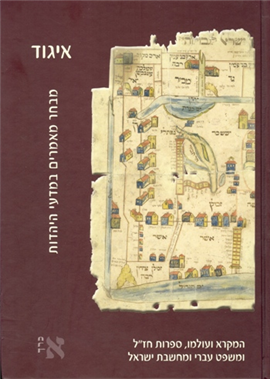
-25%Iggud - Selected Essays in Jewish Studies, Vol. 2 History of the Jewish People and Contemporary Jewish Society Editors: Gershon C. Bacon, Albert Baumgarten, Jacob Barnai, Haim Waxman, and Israel Yuval Full Table of Contents Iggud: Selected Essays in Jewish Studies: Articles published in the Iggud Volumes will be based on the best lectures which were given in the World Congress for Jewish Studies held in Jerusalem once every 4 years, and these volumes will therefore replace the Proceedings of the World Congress of Jewish Studies which have been published thus far. In the first volumes of Iggud (1-3) were gathered articles based on lectures given on the 14th Congress held in August 2005.
-
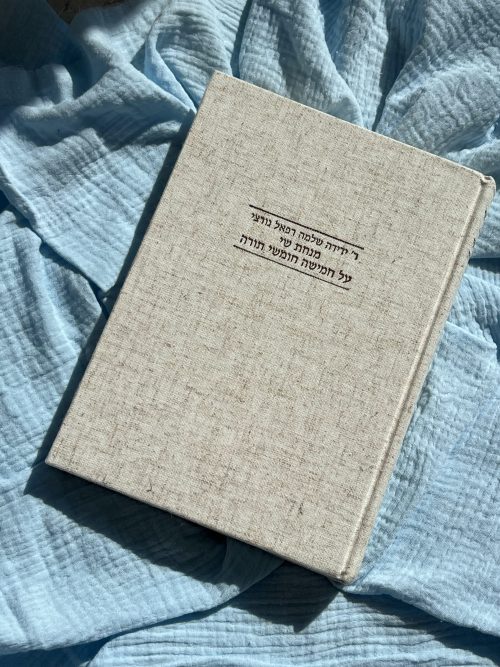
-25%Minhat Shai, by the seventeenth-century scholar Yedidyah Shlomo Norzi, deals with the forms, vocalization, and Masoretic interpretation of biblical terms, in the order of their appearance in the Bible. The aim of this work is to analyze words with respect to their orthography, vocalization, and cantillation, and to assess their proper forms. The work was first printed in Mantua in the middle of the eighteenth century; it has since been reprinted in various places and always as part of editions of the Pentateuch or other sections of the Bible. The version in use today accords with the text as printed in Mikra’ot Gedolot (Vilna/Warsaw editions), where the relevant sections were appended following each biblical book. Even today, the work is considered an important guide as far as the biblical text is concerned; it reflects important decisions on questions of biblical orthography and interpretation. Scholars and students refer to it and respect its verdicts even though the version currently in use contains numerous errata. Many of the vocalization and cantillation marks noted by the author have been altered or omitted; thus, the author’s arguments are at times unclear, and at times even seem to contradict what may have been his original intention.
-
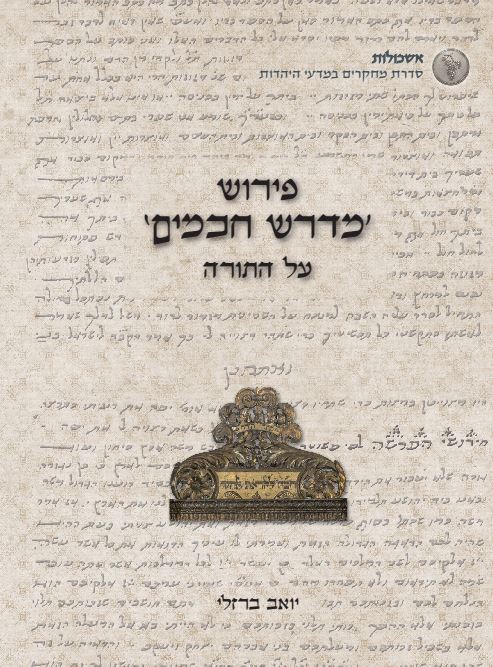
-25%The commentaries of Midrash Chachamim were written by an anonymous Italian author in the early sixteenth century as part of an extensive commentary to the weekly portions of the Torah reading. Throughout the work, the author copied the early complete midrashim such as Genesis Rabba and the halakhic midrashim almost verbatim. His autonomous creation is contained mostly in the commentaries to those portions that are missing in the halakhic midrash, and as such they are contained in the books of Exodus, Numbers and Deuteronomy (though not for all portions of these books). The author tried to explain the verses according to their plain meaning, although he often incorporated in-depth discussions as well as interpretive and pedagogic excursus. In this edition, for the first time, the commentaries of Midrash Chachamim were collated from manuscript for the 27 weekly portions for which they were written, and brought together in order to present the author’s hermeneutical approach. The edition is complemented with an introduction that shows the background for writing these commentaries and discusses the style and interpretive techniques employed by the author.
-
-25%Jewish Studies 58 (2) (2023) Table of Contents Abstracts List of Articles: 1. Brachi Elitzur and Eden HaCohen - “They Rejected the Desirable Land”: The Sin of the Spies and its Reframing in Rabbinic Literature 2. Jonathan Grossman and Jonathan Jacobs - Ambiguity on the Level of the Plain Sense in Rashi's Commentaries on the Bible 3. Dov Schwartz - Between Spain and Provence: Critical and Cultural Exploration of Rabbi Prof. B. Z. Benedict’s Oeuvre 4. Michal Aziza Ohana - A Modern Rabbinical Autobiography by R. Yeshuah Shimon Hayyim Ovadiah of Sefrou
-
-25%Jewish Studies 58 (1) (2023) Table of Contents Abstracts List of Articles: 1. Haggai Mazuz - Midrashic Allusions in al-Bīrūnī’s Writings 2. Omer Michaelis - Psalms and ʿilm al-bāṭin in Baḥya ibn Paquda’s Duties of the Hearts 3. Biti Roi and Uziel Fuchs - The Use of the Introduction to the Talmud Attributed to R. Shmuel haNaggid in Tiqqunei ha- Zohar Literature 4. Amihai Radzyner - The Ring and the Lulav: The Religious Kibbutz and the Halakhic Requirements for Private Property
-
-25%Jewish Studies 57 (2) (2022) Table of Contents Abstracts List of Articles: Noam Mizrahi - The Interpretive Transmission of Isaiah as Witnessed by 4QIsag (4Q61) Yael Escojido and Emmanuel Friedheim - The Liberation of Jewish Slaves in the Letter of Aristeas as an Expression of Fear of Assimilation: A Study of the Assimilation Process Affecting Jewish Slaves in the Hellenistic Diaspora Hananel Mack - Because of Whom do the Rains Fall? Alternating Credits in Rain Stories of the Aggadah Literature Gilad Sasson - “In the Sanctuary, O Lord, which thy Hands have Established”: The Homily of Mekhilta of R. Ishmael and Its Parallels in Avot de-Rabbi Natan and in Bavli Ketubbot
-
-25%Jewish Studies 57 (1) (2022) Table of Contents Abstracts List of Articles: Maya Shemuelli- An Existential View of Return and Alienation: Exegetic Examination of the Book of Ruth Ofer Elior- The Medieval Hebrew Translations of Euclid's Elements Judith Weiss- Dehiyya, Halifa, and HIbbur: Sefirotic Notions of Metempsychosis in Early Kabbalistic Literature and Some of their Reverberations Ayelet Walfish-Fraenkel- Angels, Demons, and Warlocks: The Myth of the Sons of God and the Daughters of Men in the Zohar as an Etiology of Evil Neta Dan- “22 Letters for Cursing”: Swearing and Insults in Uri Zvi Greenberg's Poetic Language
-
-25%Meir of Rothenburg (c. 1215 – 2 May 1293) was a German Rabbi and poet, a major author of the tosafot on Rashi’s commentary on the Talmud. He is also known as Meir ben Baruch, the Maharam of Rothenburg. His responsa are of great importance to advanced students of the Talmud, as well as to students of Jewish life and customs of the 13th Century.
-
-25%Meir of Rothenburg (c. 1215 – 2 May 1293) was a German Rabbi and poet, a major author of the tosafot on Rashi’s commentary on the Talmud. He is also known as Meir ben Baruch, the Maharam of Rothenburg. His responsa are of great importance to advanced students of the Talmud, as well as to students of Jewish life and customs of the 13th Century.
-
-25%Iggud - Selected Essays in Jewish Studies, Vol. 1 The Bible and Its World, Rabbinic Literature and Jewish Thought Editors: Baruch J. Schwartz, Aharon Shemesh, and Abraham Melamed Full Table of Contents Iggud: Selected Essays in Jewish Studies: Articles published in the Iggud Volumes will be based on the best lectures which were given in the World Congress for Jewish Studies held in Jerusalem once every 4 years, and these volumes will therefore replace the Proceedings of the World Congress of Jewish Studies which have been published thus far. In the first volumes of Iggud (1-3) were gathered articles based on lectures given on the 14th Congress held in August 2005. " In the Bible and Its World Section eleven articles are published in Hebrew and five in English. This large number reflects truthfully the strenuous development in researching Bible commentators and their methods, a subject which is again central in Biblical Science of this era. Beside articles in this field, appears a selection of articles about Bible Study itself with its various spheres, such as Biblical criticism and prophetic books, archeology and realism, and the various ways that Biblical Literature takes. The Rabbinic Literature and Jewish Law section includes nine Articles in Hebrew and two in English. These studies span several branches of Talmud and Halakha, and show especially the expanding interest, these days, in the questions touching on the process of editing and forming of Rabbinic Literature. Further to these studies dealing with these aspects of the profession, appear discussions in issues of Halakha, Law and Talmudic tale history. Eight articles in Hebrew and two in English are published in the Third section, which is dedicated to Jewish Thought. The studies are naturally divided into studies of contemplation and teachings of the philosophers themselves, through their writings together with the era they lived in and the elements influencing them on the one hand, and in these several studies comparing between the first and the last and studying the connection between them, and studying their methods of research on the other hand." (from the preface).