-
-25%In the past, prayers in the synagogue were adorned with many liturgical poems, piyyuṭim, in all the various Jewish communities, both on the major festivals and on many Sabbaths over the course of the year. Manuscripts preserve thousands of piyyuṭim, only some of which are familiar today, and some of which have never been published until our generation. This book collects more than two hundred piyyuṭim, which the Jews of Ashkenaz (German-speaking lands) and Northern France used to recite on wedding Sabbaths and Sabbaths on which circumcisions occurred. Dozens of poets wrote piyyuṭim for these festive occasions. Most of the piyyuṭim were written by German or French poets (between the eleventh and fourteenth centuries), but some of them were written by poets in the Land of Israel, Italy, or Spain. Some of the compositions were written in honor of lifecycle celebrations occurring in the families of the poets themselves. Aside from the major popular genres of Ashkenazic piyyuṭ (yoẓer, ofan, and zulat, in the blessings surrounding the morning Shema), the corpus in this volume also contains representatives of many unusual genres of piyyuṭ; this prominently demonstrates that on Sabbaths of family celebrations, the poets of Ashkenaz and Northern France wanted to include piyyuṭim in many different positions in the liturgy, more varied than usual. Especially prominent is the large unit of piyyuṭim that were recited surrounding the bridegroom’s ‘aliyya to the Torah: reshut (“invitation”) poems for the bridegroom and his groomsmen to go up for their ‘aliyyot, songs in honor of the bridegroom after his ‘aliyya, poems surrounding the reading of Ve’avraham Zaqen (a passage from the Torah that is read in honor of the bridegroom — today only in Sephardic synagogues, but in the past also in Ashkenazic), and Mi Shebberakh poets blessing the bridegroom after his ‘aliyya. Some of the poems are in Aramaic. The book includes also piyyuṭim that were recited (not specifically on the Sabbath) at the actual wedding and circumcision rituals, and piyyuṭim designated for the Grace After Meals of the festive meals in honor of the wedding and circumcision. The Ashkenazic poets were extremely learned, and they included large amounts of material from the lore (aggada) of the Talmud and Midrash. The late Prof. Jonah Fraenkel was the one that gathered the piyyuṭim for the Sabbaths of the year recited in the Ashkenazic and Northern French communities, as a continuation of his series of Ashkenazic maḥzorim for the Three Festivals and those for the High Holidays edited by Dr. Daniel Goldschmidt. This volume of piyyuṭim for wedding and circumcision Sabbaths is the first in a series whose purpose is to publish all piyyuṭim for all Sabbaths that were recited in the lands of Ashkenaz and Northern France. Dr. Gabriel Wasseman, a scholar of piyyuṭ, completed Fraenkel’s work on this volume, indicating textual variants from many dozens of manuscripts, and writing a detailed commentary on the piyyuṭim. He also wrote a long introduction to the volume, which, among other things, offers a birds’-eye view of all the piyyuṭim, organized into their specific genres, and traces the development of the customs of reciting these piyyuṭim in the various communities over the course of centuries. Avraham Fraenkel added chapters to the introduction, which present a description of the customs of weddings and of circumcisions in Ashkenaz and Northern France, on the basis of books of minhagim (“customs”) and prayerbooks from the Ashkenazic and Northern French communities.
-
-25%Midrash Eicha Zuta is a midrash Aggadah with a unique structure, which originates from the fact that it was created by conjoining two different midrashim: the first an exegesis that includes drashot of the first three verses of the Book of Lamentations, and the second an exegesis that includes drashot on verses from Nevi'im and Ketuvim.
-
-25%Jewish Studies 58 (2) (2023) Table of Contents Abstracts List of Articles: 1. Brachi Elitzur and Eden HaCohen - “They Rejected the Desirable Land”: The Sin of the Spies and its Reframing in Rabbinic Literature 2. Jonathan Grossman and Jonathan Jacobs - Ambiguity on the Level of the Plain Sense in Rashi's Commentaries on the Bible 3. Dov Schwartz - Between Spain and Provence: Critical and Cultural Exploration of Rabbi Prof. B. Z. Benedict’s Oeuvre 4. Michal Aziza Ohana - A Modern Rabbinical Autobiography by R. Yeshuah Shimon Hayyim Ovadiah of Sefrou
-
-25%Jewish Studies 58 (1) (2023) Table of Contents Abstracts List of Articles: 1. Haggai Mazuz - Midrashic Allusions in al-Bīrūnī’s Writings 2. Omer Michaelis - Psalms and ʿilm al-bāṭin in Baḥya ibn Paquda’s Duties of the Hearts 3. Biti Roi and Uziel Fuchs - The Use of the Introduction to the Talmud Attributed to R. Shmuel haNaggid in Tiqqunei ha- Zohar Literature 4. Amihai Radzyner - The Ring and the Lulav: The Religious Kibbutz and the Halakhic Requirements for Private Property
-
-25%Jewish Studies 57 (2) (2022) Table of Contents Abstracts List of Articles: Noam Mizrahi - The Interpretive Transmission of Isaiah as Witnessed by 4QIsag (4Q61) Yael Escojido and Emmanuel Friedheim - The Liberation of Jewish Slaves in the Letter of Aristeas as an Expression of Fear of Assimilation: A Study of the Assimilation Process Affecting Jewish Slaves in the Hellenistic Diaspora Hananel Mack - Because of Whom do the Rains Fall? Alternating Credits in Rain Stories of the Aggadah Literature Gilad Sasson - “In the Sanctuary, O Lord, which thy Hands have Established”: The Homily of Mekhilta of R. Ishmael and Its Parallels in Avot de-Rabbi Natan and in Bavli Ketubbot
-
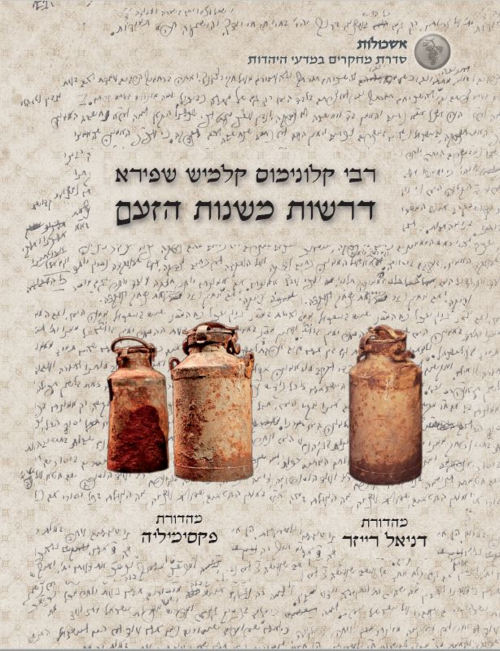
-25%Scholarly and Facsimile Edition This book presents the sermons of Rabbi Kalonymus Kalmish Shapira, The Piaseczno Rebbe, which were delivered during the Holocaust years in the Warsaw Ghetto. The second volume is a facsimile edition, with the original manuscript on one side and the detailed line-by-line presentation of the text as the Rebbe corrected it. The second volume includes the words and passages that were deleted and is printed in 4 different colors which follow the proofs and changes that the Rebbe made in the text.
-
-25%Jewish Studies 57 (1) (2022) Table of Contents Abstracts List of Articles: Maya Shemuelli- An Existential View of Return and Alienation: Exegetic Examination of the Book of Ruth Ofer Elior- The Medieval Hebrew Translations of Euclid's Elements Judith Weiss- Dehiyya, Halifa, and HIbbur: Sefirotic Notions of Metempsychosis in Early Kabbalistic Literature and Some of their Reverberations Ayelet Walfish-Fraenkel- Angels, Demons, and Warlocks: The Myth of the Sons of God and the Daughters of Men in the Zohar as an Etiology of Evil Neta Dan- “22 Letters for Cursing”: Swearing and Insults in Uri Zvi Greenberg's Poetic Language
-
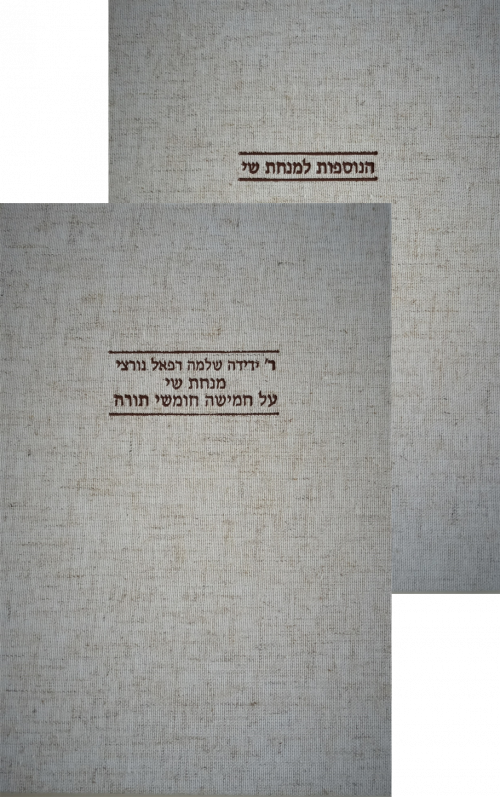
-25%Minhat Shai, by the seventeenth-century scholar Yedidyah Shlomo Norzi, deals with the forms, vocalization, and Masoretic interpretation of biblical terms, in the order of their appearance in the Bible. The aim of this work is to analyze words with respect to their orthography, vocalization, and cantillation, and to assess their proper forms. The work was first printed in Mantua in the middle of the eighteenth century; it has since been reprinted in various places and always as part of editions of the Pentateuch or other sections of the Bible. The version in use today accords with the text as printed in Mikra’ot Gedolot (Vilna/Warsaw editions), where the relevant sections were appended following each biblical book. The Addenda to Minhat Shai complete the publication of Minhat Shai on the Torah.
-
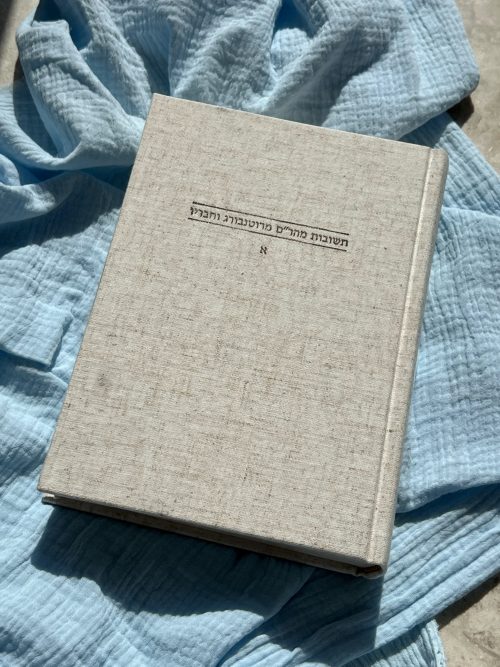
-25%Meir of Rothenburg (c. 1215 – 2 May 1293) was a German Rabbi and poet, a major author of the tosafot on Rashi’s commentary on the Talmud. He is also known as Meir ben Baruch, the Maharam of Rothenburg. His responsa are of great importance to advanced students of the Talmud, as well as to students of Jewish life and customs of the 13th Century.
-
-25%Meir of Rothenburg (c. 1215 – 2 May 1293) was a German Rabbi and poet, a major author of the tosafot on Rashi’s commentary on the Talmud. He is also known as Meir ben Baruch, the Maharam of Rothenburg. His responsa are of great importance to advanced students of the Talmud, as well as to students of Jewish life and customs of the 13th Century.
-
-25%Jewish Studies 56 (2021) Full Table of Contents Abstracts List of Articles: HEBREW SECTION Yuval Fraenkel - Between Man and Place: The Holy Man and the Temple in Stories about Ḥoni Ha`meagel, and R. Ḥanina Ben Dosa Yosef Marcus - The Status of Persons with Physical Defects in Tannaitic Literature: A New Analysis Michael Avioz - “It is Known that the Stag eats Snakes”: Examining the Scientific Knowledge Drawn Upon by Medieval Jewish Interpretations of Psalms 42 Abraham David - Flavius Josephus’s Writings in Sixteenth Century Jewish Historiography: The Case of Shalshelet ha-Kabbalah of Gedalyah Ibn Yaḥya Chen Avizohar-Hagay and Yuval Harari - ‘For a Woman in a Hard Labor’: A Compilation of Magic Recipes to Deal with Labor Difficulties Ben Landau Spinoza and the “Ecole de Paris” 161 ENGLISH SECTION Israel Knohl - The Original Version of the Priestly Creation Account and the Religious Significance of the Number Eight in the Bible and in Early Jewish MysticismIn his influential study on Jewish mysticism, Gershom