-
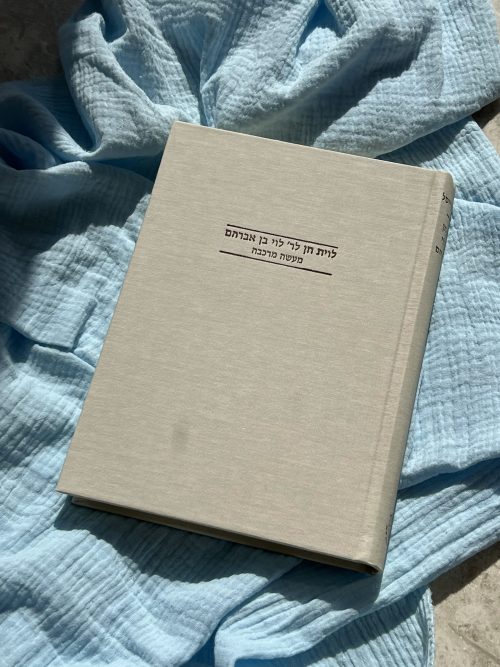
-25%Critical annotated edition of part one of treatise seven of R. Levi's encyclopedia, which is devoted to an exegesis of the "Work of the Chariot". This volume also contains an edition of the surviving section of treatise five of the encyclopedia ("Divine Science") and a critical edition of the section of the poem "Battei ha-Nefesh ve-ha-Laḥashim" devoted to the "Work of the Chariot", together with the four medieval commentaries written on this section. The introduction to this volume discusses at length the interpretation of the "Work of the Chariot" from rabbinic times to R. Levi. Towards the end of the thirteenth century, the Provençal Jewish philosopher R. Levi ben Avraham wrote a unique treatise – an in-depth Hebrew encyclopedia of the sciences and of Judaism entitled Livyat Ḥen. R. Levi was known already in his lifetime as a leading exponent of the philosophical-allegorical interpretation of the Torah and of rabbinic midrash. In the Jewish part of his encyclopedia he deals with a myriad of topics, including Jewish ethics, prophecy, the reasons for the commandments, the stories of Moses and the patriarchs, the principles of faith, the Work of Creation, the Work of the Chariot, and the interpretation of rabbinic midrash and aggadah. Prior to Livyat Ḥen R. Levi wrote an encyclopedic poem of over 1000 stanzas in rhymed meter entitled Batei ha-Nephesh ve-ha-Laḥashim. This poem is devoted to the same topics in science and Judaism that are later discussed in great detail in his treatise.
-
-25%Midrash Eicha Zuta is a midrash Aggadah with a unique structure, which originates from the fact that it was created by conjoining two different midrashim: the first an exegesis that includes drashot of the first three verses of the Book of Lamentations, and the second an exegesis that includes drashot on verses from Nevi'im and Ketuvim.
-
Rashi was the first Biblical Commentator in Northern France (Ashkenaz) to compose a comprehensive commentary to the Book of Proverbs, and this commentary has survived in 55 manuscripts scattered in libraries throughout the world. For the first time we present a critical edition of this commentary to Proverbs. This critical edition is based on MS New York JTS Lutzki 778. Variant readings from six other accurate manuscripts, the two earliest printed editions, and three later printed editions appear in the apparatus of variants. The edition also contains a “super-commentary” in which difficult words & sections in need of clarification are explained. The editor searched for Rashi’s sources - both those explicitly stated and those not. Preceding the critical edition is an introduction which analyzes important topics such as: interpolations to the commentary, Rashi’s exegetical approach, language & syntax and the Jewish-Christian debate.
-
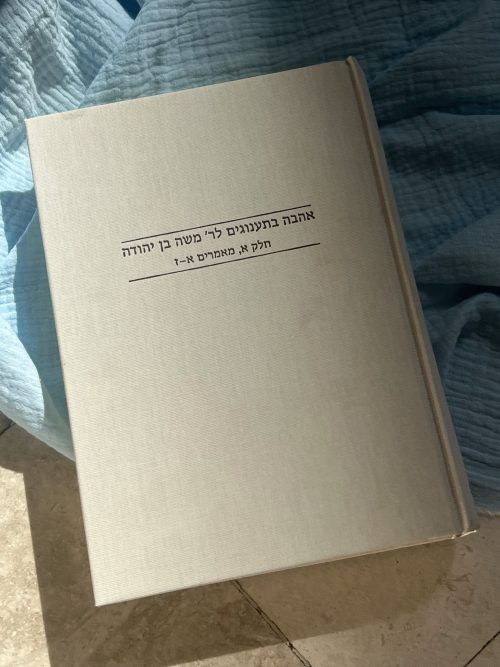
The book Ahava ba-Taanugim (Love In delights) was written during the years 1353 – 1356 by Rabbi Moses Ben Judah. It is a huge and comprehensive encyclopedia of Aristotelian physics and metaphysics and includes also a substantial theological section. Its author discusses and explains each scientific topic in a creative and innovative way: Some explanations on matter, atoms, time and motion, have no source in the classical Aristotelian literature. These innovations contributed to the development of sciences of the author's days and they reflect new trends of the study of Aristotle's philosophy of nature among the 14th century scholars. These trends paved the ground for modern science that, as modern scholarship observed, did not emerge ex nihilo, but had its roots in the criticism of Aristotelian science in the 14th century. The current book is a critical edition of the first seven discourses of the first part of the encyclopedia, which deals with physics. Each discourse deals with one scientific topic and includes some biblical commentarial chapters that aim to show the harmony between the scientific topic and the Torah and to expose the secrets that were hinted by Ibn Ezra, Maimonides and Nachmanides in their treatises. The edition includes an introduction which presents a general overview of the treatise: its period, place and its purpose, its sources and its approach. The introduction also describes and explains the content of the seven discourses presented in the edition and highlights its innovations and main original explanations. This book is in Hebrew edition only.
-
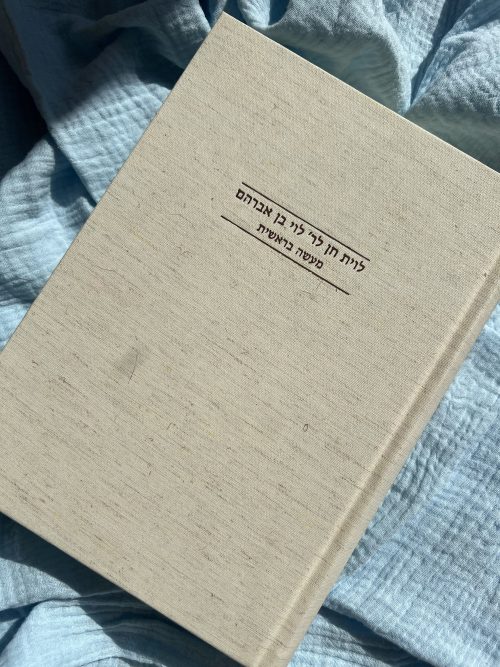
Critical annotated edition of the third part of treatise six of R. Levi's encyclopedia, which is devoted to an exegesis of the "Work of Creation". In this part R. Levi deals with the creation story in the Torah, the story of Adam and Eve in the Garden of Eden, and the stories of the early generations of humanity. The edition includes both the shorter and longer recensions of this part, as well as a critical edition of the section "Work of Creation" in R. Levi's encyclopedic poem, "Battei ha-Nefesh ve-ha-Laḥashim", together with the four medieval commentaries written on this section. The introduction to this volume discusses the author and his works and deals with the historical background to R. Levi's approach to the "Work of Creation".
-
Along with the official Aramaic translation of the Prophets, known as "Targum Yonatan", other Aramaic translations were circulating in the Jewish communities. These translations, most of which are found in manuscripts, are referred to in the modern research as "Translation Supplements" (Toseftot Targum), some of which have Midrashic extensions. The source of the translation additions is vague: they may be part of a complete Palestinian translation of the prophets, and they may be translations of the Haftoroh chapters only. The book contains a collection of one hundred and fifty texts, with a varied dialectical nature collected from over a hundred manuscripts and first editions.
-
This commentary was first published in 1855 in the Aharon Yelink Edition of the 32 Hamburg manuscripts and was welcomed happily by the Jewish Sages of that generation, however it was quickly forgotten and its relation to Rashbam was distrusted. The damaged edition, in which it was published, did not benefit it either, and it hardly left any impression on the Biblical research of the new age. The current essay is a revised scientific edition of the commentary, based on all the known wording testimonies known today: Three complete manuscripts, two segments of other manuscripts and another written testimony of another manuscript which we do not hold. The commentary's edition is preceded by a comprehensive preface which deals with a wide range of subjects: identifying the commentary's author, its affinity to other essays by Rashbam, the sources of the commentary, the literary aspects of the commentary, allegoric commentary of Song of Songs and his message according to his time and era, verbal issues in the commentary and an introduction to this edition.
-
For over fourteen hundred years, since post-Talmudic times, a list of fast days has been in circulation; it mandates at least one, but occasionally two, three, and even four fasts per month. These fasts commemorate disasters that occurred during biblical and Second Temple times; events connected with the Temple’s destruction; and the deaths of well-known individuals. The list penetrated into central halachic works; in some circles these events are commemorated to this day, albeit not by fasting. This list is known as Megillat Taʿanit Batra, “the later scroll of fasts,” to distinguish it from Megillat Taʿanit, which originated in the Second Temple period. This book traces the historical development of the list. The author has culled previously unknown versions of this list from manuscripts, early piyyutim, and other surprising sources. All these versions of the list are discussed in detail; a synoptic analysis of each fast, as presented in the various sources, attempts to solve some of the riddles presented by the texts. Towards the end of the book, a detailed chapter deals with the complex occurrences of the list in halachic literature. The final chapter sets out the internal structure of the list; attempts to arrive at its original form; and maps its metamorphoses through time.
-
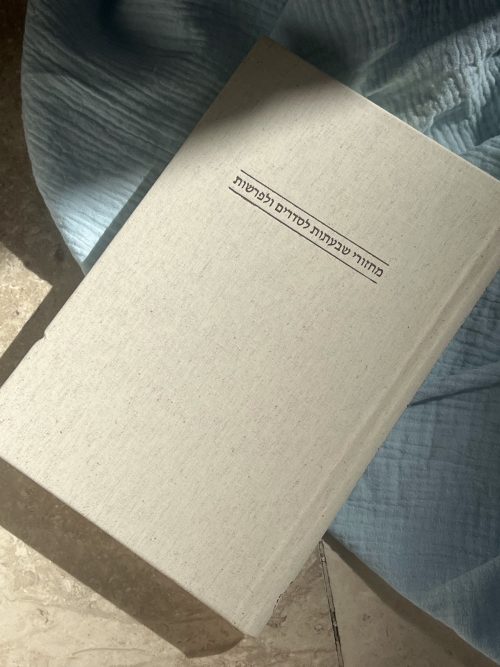
This book represents a first attempt to assemble liturgical poems in a scientific edition according to their genre rather than according to authorship. All the Shiv‛atot cycles (liturgical poems for shabbat Amidah prayer) composed according to the order of the weekly Torah portion have been collected from the Genizah manuscripts. The book presents three main cycles, representing three stages in the history of liturgical poems: The remnants of an ancient Shiv‛atot cycle (composed around the sixth century) which was dedicated to the reading order of the Eretz-Israel triennial cycle, and two Shiv‛atot cycles for the annual cycle’s tractates – one of which was probably composed around the ninth or tenth century and remains loyal to the classical traditions of the genre, and the second, probably composed at the end of the tenth century or the beginning of the eleventh, which reflects a stage in which the later poets abandoned the ancient patterns or restricted them. Alongside these cycles, sections of other Shiv‛atot cycles whose remnants were found in the Genizah are included. The poems are printed in their entirety, with variant manuscripts readings and detailed notes. The book opens with an introduction that describes each cycle in detail and examines the development of the genre over the generations.
-
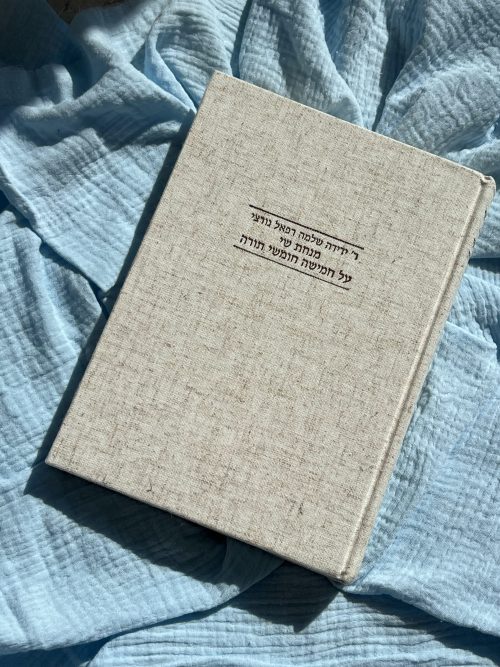
Minhat Shai, by the seventeenth-century scholar Yedidyah Shlomo Norzi, deals with the forms, vocalization, and Masoretic interpretation of biblical terms, in the order of their appearance in the Bible. The aim of this work is to analyze words with respect to their orthography, vocalization, and cantillation, and to assess their proper forms. The work was first printed in Mantua in the middle of the eighteenth century; it has since been reprinted in various places and always as part of editions of the Pentateuch or other sections of the Bible. The version in use today accords with the text as printed in Mikra’ot Gedolot (Vilna/Warsaw editions), where the relevant sections were appended following each biblical book. Even today, the work is considered an important guide as far as the biblical text is concerned; it reflects important decisions on questions of biblical orthography and interpretation. Scholars and students refer to it and respect its verdicts even though the version currently in use contains numerous errata. Many of the vocalization and cantillation marks noted by the author have been altered or omitted; thus, the author’s arguments are at times unclear, and at times even seem to contradict what may have been his original intention.
-
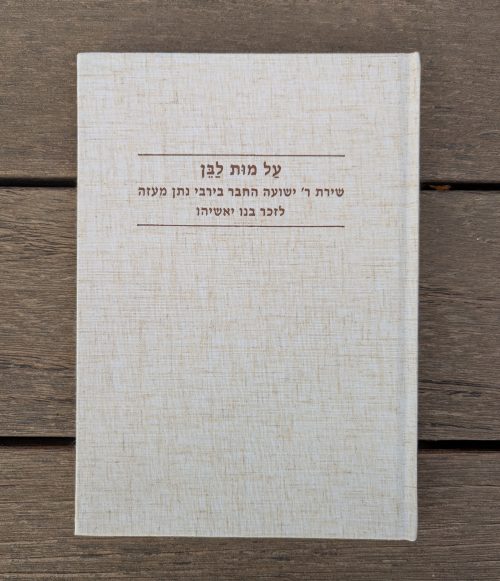
On Friday, March 11, 1026, Yoshiyahu, the only son, of the Dayan of the Jewish community in Gaza City, Rabbi Yeshua HeHaver berrebi Nathan, passed away suddenly at the age of six. The bereaved father, who found it difficult to console himself, wrote a comprehensive Qedushta in memory of his son. The Qedushta is a set of piyyutim that was recited during the Amida of Shacharit on Shabbat, and was written according to fixed rules. The father conformed to the technical rules of the form of the Qedushta, but infused unique content into the piyyutim: He expressed in them his great pain and illustrated it with his repeated cries, and also included detailed descriptions of his son, who studied Torah all day. On the other hand, he also tried to deal with his grief in traditional ways, out of faith in God who brought this disaster upon him because of his sins. In one passage he even gave a list of bereaved fathers mentioned in the Bible, starting with Adam, who mourned his son Abel, and tried to convince himself that he was no better than they. The Qedushta was discovered in the Cairo Genizah almost in its entirety, in a unique manuscript which is the author's autograph, its pages scattered among various libraries. These pages were discovered bit by bit over decades. In this book, all the parts of the Qedushta that have come down to us are printed together for the first time, accompanied by a commentary and a detailed introduction. The introduction discusses the unique contents of the Qedushta and the methods of its design. Rabbi Yeshua's Qedusuta is compared to the works of several contemporary poets who dealt with disasters: on the one hand, to poems written in Spain, most notably the laments of Rabbi Samuel HaNagid over the death of his brother; and on the other hand, to the poems of Rabbi Samuel the Third, written in the wake of the pogrom against the Jews of Egypt, in which he was arrested and saved at the last moment from execution; and a man named Abraham HaCohen, who wrote piyyutim while imprisoned due to a financial dispute. In light of these comparisons, the purpose of the Qedushta is also discussed, with an attempt to clarify whether it was intended to be recited in public prayer, and when such a prayer could have taken place. Furthermore, the Qedushta is a fascinating human document, full of fatherly love and pain over loss. The struggle to cope with bereavement, unfortunately, is not over. The fact that these events took place a thousand years ago in Gaza also takes on special significance in these days.
-
-25%Meir of Rothenburg (c. 1215 – 2 May 1293) was a German Rabbi and poet, a major author of the tosafot on Rashi’s commentary on the Talmud. He is also known as Meir ben Baruch, the Maharam of Rothenburg. His responsa are of great importance to advanced students of the Talmud, as well as to students of Jewish life and customs of the 13th Century.