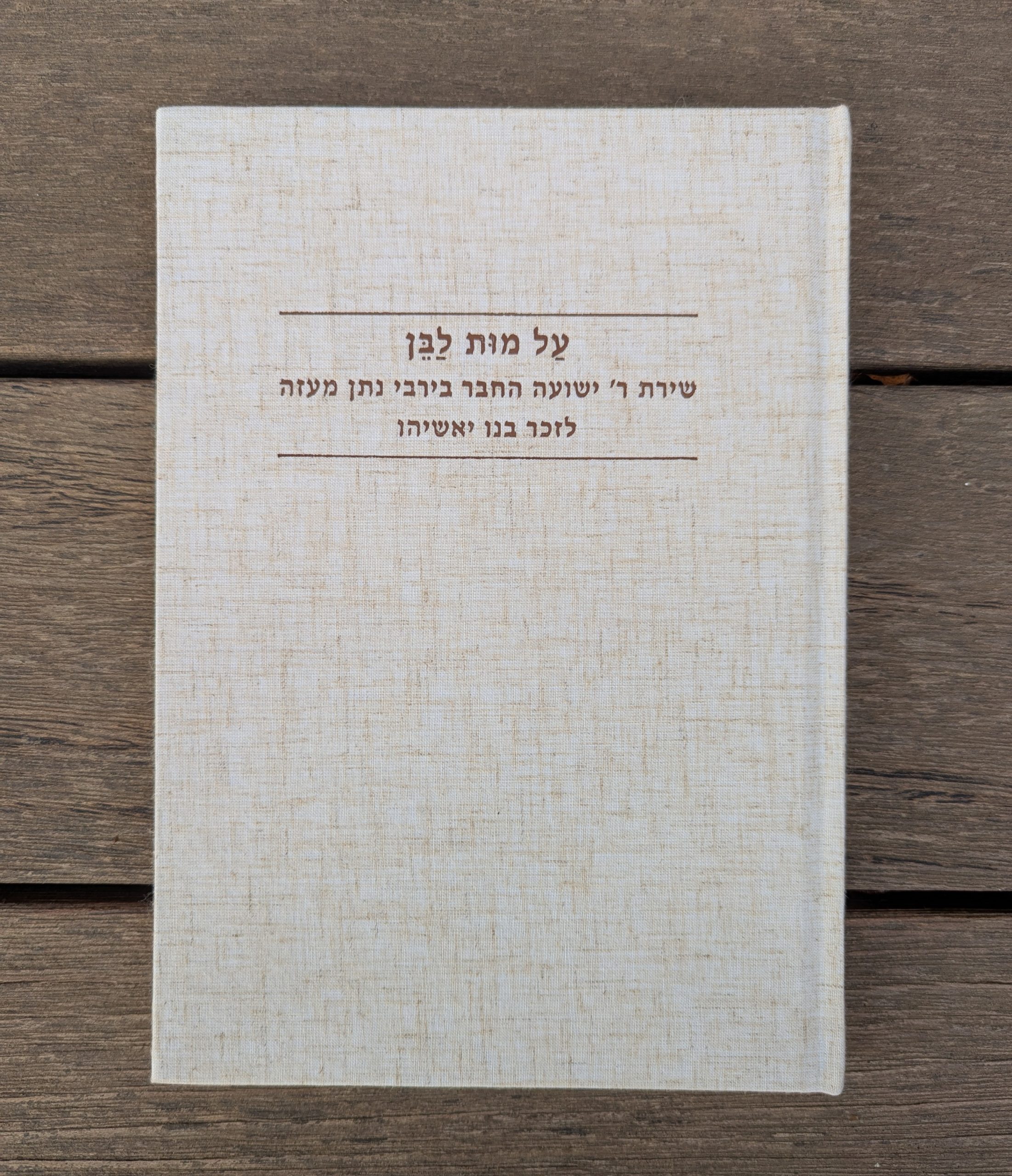

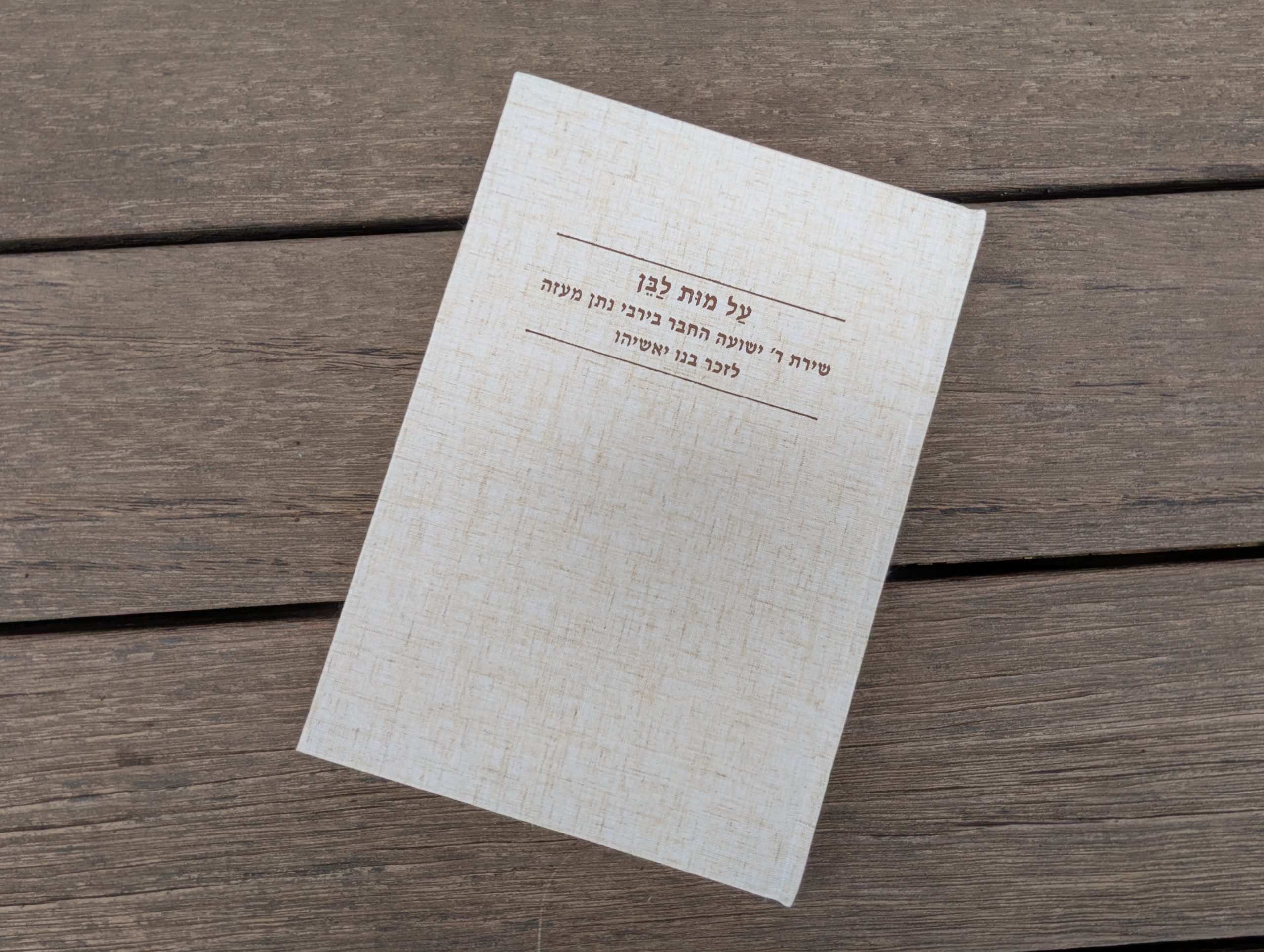
On Friday, March 11, 1026, Yoshiyahu, the only son, of the Dayan of the Jewish community in Gaza City, Rabbi Yeshua HeHaver berrebi Nathan, passed away suddenly at the age of six. The bereaved father, who found it difficult to console himself, wrote a comprehensive Qedushta in memory of his son. The Qedushta is a set of piyyutim that was recited during the Amida of Shacharit on Shabbat, and was written according to fixed rules. The father conformed to the technical rules of the form of the Qedushta, but infused unique content into the piyyutim: He expressed in them his great pain and illustrated it with his repeated cries, and also included detailed descriptions of his son, who studied Torah all day. On the other hand, he also tried to deal with his grief in traditional ways, out of faith in God who brought this disaster upon him because of his sins. In one passage he even gave a list of bereaved fathers mentioned in the Bible, starting with Adam, who mourned his son Abel, and tried to convince himself that he was no better than they.
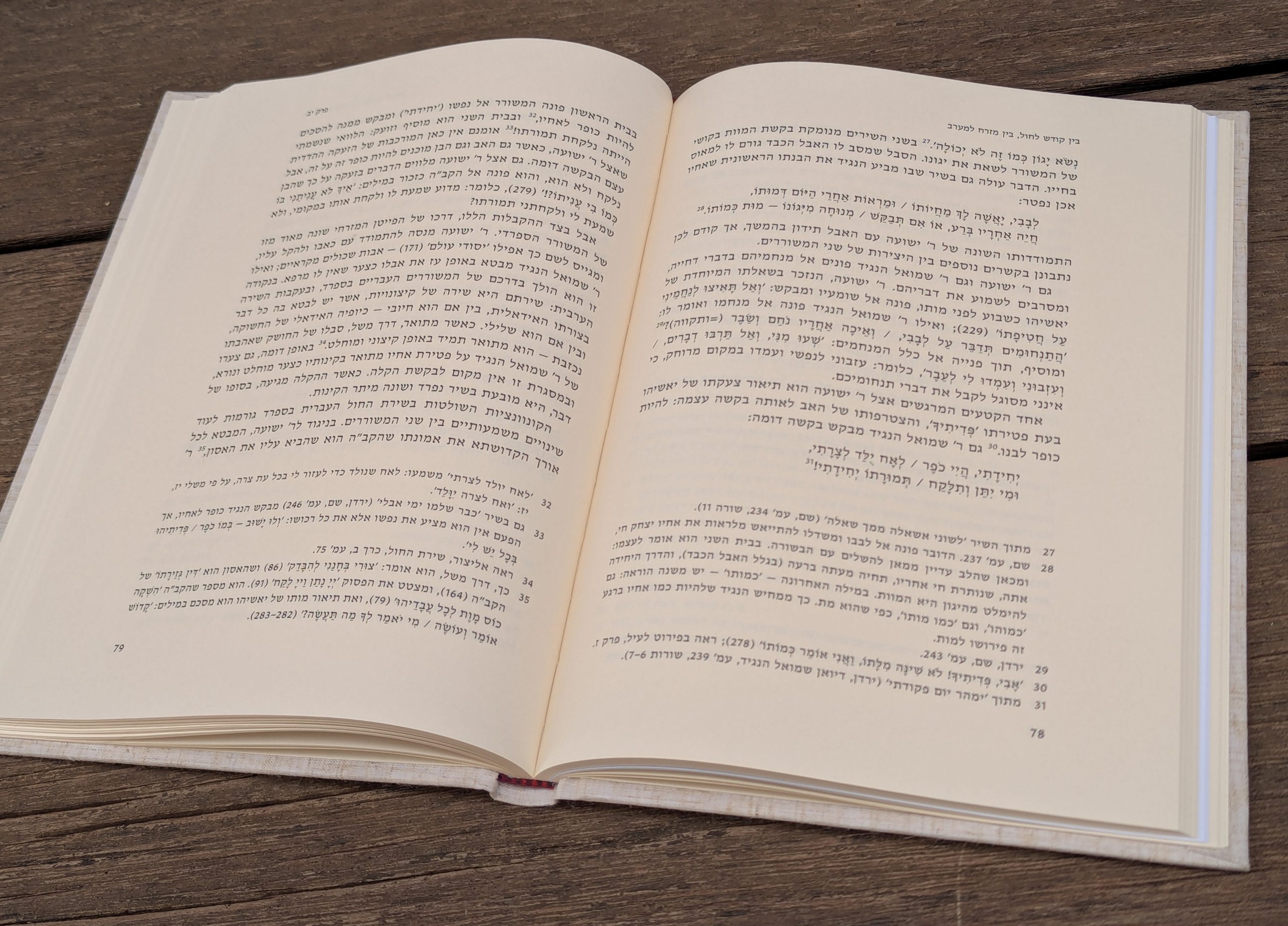
The Qedushta was discovered in the Cairo Genizah almost in its entirety, in a unique manuscript which is the author’s autograph, its pages scattered among various libraries. These pages were discovered bit by bit over decades. In this book, all the parts of the Qedushta that have come down to us are printed together for the first time, accompanied by a commentary and a detailed introduction. The introduction discusses the unique contents of the Qedushta and the methods of its design. Rabbi Yeshua’s Qedusuta is compared to the works of several contemporary poets who dealt with disasters: on the one hand, to poems written in Spain, most notably the laments of Rabbi Samuel HaNagid over the death of his brother; and on the other hand, to the poems of Rabbi Samuel the Third, written in the wake of the pogrom against the Jews of Egypt, in which he was arrested and saved at the last moment from execution; and a man named Abraham HaCohen, who wrote piyyutim while imprisoned due to a financial dispute. In light of these comparisons, the purpose of the Qedushta is also discussed, with an attempt to clarify whether it was intended to be recited in public prayer, and when such a prayer could have taken place.
Furthermore, the Qedushta is a fascinating human document, full of fatherly love and pain over loss. The struggle to cope with bereavement, unfortunately, is not over. The fact that these events took place a thousand years ago in Gaza also takes on special significance in these days.